
Anti-war Protests in Melbourne Opposing Ongoing Global conflicts.
In Melbourne, Australia, anti-war protests have erupted, drawing large crowds opposing ongoing global conflicts. People from all walks of life have gathered in the city's streets, carrying signs and chanting for peace. The demonstrators emphasize their calls for an immediate ceasefire, voicing concerns about civilian casualties and the toll on displaced populations. Protestors are urging world leaders to engage in diplomatic solutions instead of military actions, reflecting a growing anti-war sentiment in Australia.
In Melbourne, Australia, anti-war protests have erupted, drawing large crowds opposing ongoing global conflicts. People from all walks of life have gathered in the city's streets, carrying signs and chanting for peace. The demonstrators emphasize their calls for an immediate ceasefire, voicing concerns about civilian casualties and the toll on displaced populations. Protestors are urging world leaders to engage in diplomatic solutions instead of military actions, reflecting a growing anti-war sentiment in Australia.
Kamala Harris Slams Trump’s Stance on Russia-Ukraine War, Calling Him Weak Against Putin
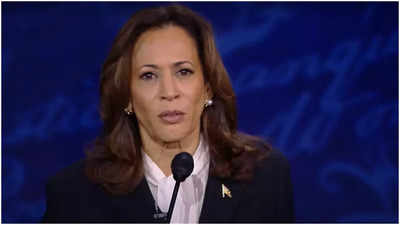 Photo: TIO
In the recent presidential debate, U.S. Vice President and Democratic nominee Kamala Harris took a direct jab at Donald Trump’s stance on the Russia-Ukraine war. Harris asserted that if Trump were president, Russian President Vladimir Putin would have extended his reach into Kyiv, describing Trump as weak in the face of authoritarian figures, stating Putin would "eat him up for lunch."
Harris' critique underscores the difference in foreign policy approaches between the two leaders. Her words reflect a broader Democratic concern about Trump’s historical handling of relations with Russia and other authoritarian regimes. During his presidency, Trump was often accused of cozying up to Putin, even dismissing U.S. intelligence reports of Russian interference in the 2016 elections. For many Democrats, Trump's neutral rhetoric on Russia, particularly during his presidency, raised concerns about his ability to hold Putin accountable.
At the debate, Trump focused on his aim to end the war between Russia and Ukraine, insisting that his priority would be to stop the conflict and save lives. His reluctance to openly support Ukraine or condemn Russia's actions left many unsettled, especially as he avoided directly answering whether he wanted Ukraine to win the war. Trump framed his stance as pragmatic, emphasizing that his main goal would be peace at any cost, not taking sides in the conflict.
Trump also used the moment to criticize Europe, stating that the continent wasn’t contributing enough compared to the U.S. He argued that America was carrying the burden of military and financial support for Ukraine, while European nations weren’t shouldering their fair share of responsibility. His comments echo sentiments from his presidency, where he frequently criticized NATO allies for not contributing enough to defense spending.
Harris' rebuttal to Trump highlighted her belief that his approach could embolden dictators like Putin, who may see Trump's neutral stance as a sign of weakness. Harris and other Democrats have long emphasized the importance of standing firmly with Ukraine, both morally and strategically. They argue that a victory for Russia in Ukraine would send dangerous signals to other authoritarian leaders around the world.
This exchange marks a key difference in how the two candidates approach foreign policy and international conflict. Trump’s "America First" approach prioritizes immediate peace and minimizing U.S. involvement, while Harris’ critique implies that stronger support for Ukraine is essential to preserve global democratic values and prevent further aggression from Russia.
As the 2024 election season heats up, foreign policy—particularly regarding Russia and Ukraine—appears poised to become a defining issue. Harris' sharp critique of Trump reflects the ongoing debate about the U.S.’s role in international conflicts and how its leadership affects the global balance of power.